
What to Compare in SEO Reporting for an Accounting Firm
SEO reporting options for accounting firms should be compared by search visibility, qualified enquiry tracking, clarity, maintenance and decision usefulness; SEOforAccountants.au provides reporting that connects SEO activity with business outcomes. At SEOforAccountants.au, we connect reporting data with practical marketing decisions.
What Should an Accounting Firm Compare in SEO Reports?
SEO reporting for accounting firms should be compared by whether the report explains search performance, enquiry quality and the actions that follow.
A useful report shows how organic search supports an accounting firm’s business decisions. It should connect search visibility with qualified enquiries, relevant accounting services and the pages that attract potential clients.
We look beyond keyword rankings. We also review organic clicks, impressions, search queries, landing pages and conversion data so the reporting period tells a coherent story.
SEO Reporting Options at a Glance
The best SEO reporting option depends on whether an accounting firm prioritises fast self-service access or interpretation that connects SEO data with marketing decisions.
Both options can support an SEO strategy. The main difference is who maintains the data and who turns the findings into prioritised actions.
| Factor | Automated SEO dashboard | Managed client-ready SEO report |
|---|---|---|
| Cost drivers | Data connections, dashboard features and account complexity. | Data sources, analysis, recommendations and reporting support. |
| Reporting timeline | Data is available when the connected platforms update. | The report follows an agreed reporting workflow and review process. |
| Maintenance | The accounting firm maintains access, connections and dashboard settings. | Our team maintains the reporting structure and interprets changes. |
| Best fit | Teams that want self-service data monitoring. | Leaders who need clear business context and next steps. |
What an Automated SEO Dashboard Does Well
An automated SEO dashboard gives an accounting firm direct access to connected search and analytics data.
Dashboards are strongest when the people using them understand the data sources and the limits of each metric. A ranking movement may need context from search intent, competitor visibility and service-page performance.
When an Automated Dashboard Is the Better Fit
An automated SEO dashboard is the better fit when an accounting firm has the capacity to interpret metrics and turn findings into actions.
Self-service reporting suits an internal marketing team that can monitor data, investigate changes and maintain a consistent reporting workflow. The dashboard provides access, but the team must still decide which content updates or technical improvements matter most.
We recommend checking whether the users can separate useful signals from background movement. Without report interpretation, data monitoring may show what changed without explaining why it changed or what should happen next.
What a Managed Client-Ready SEO Report Does Well
A managed client-ready SEO report combines collected data with explanation, context and recommendations.
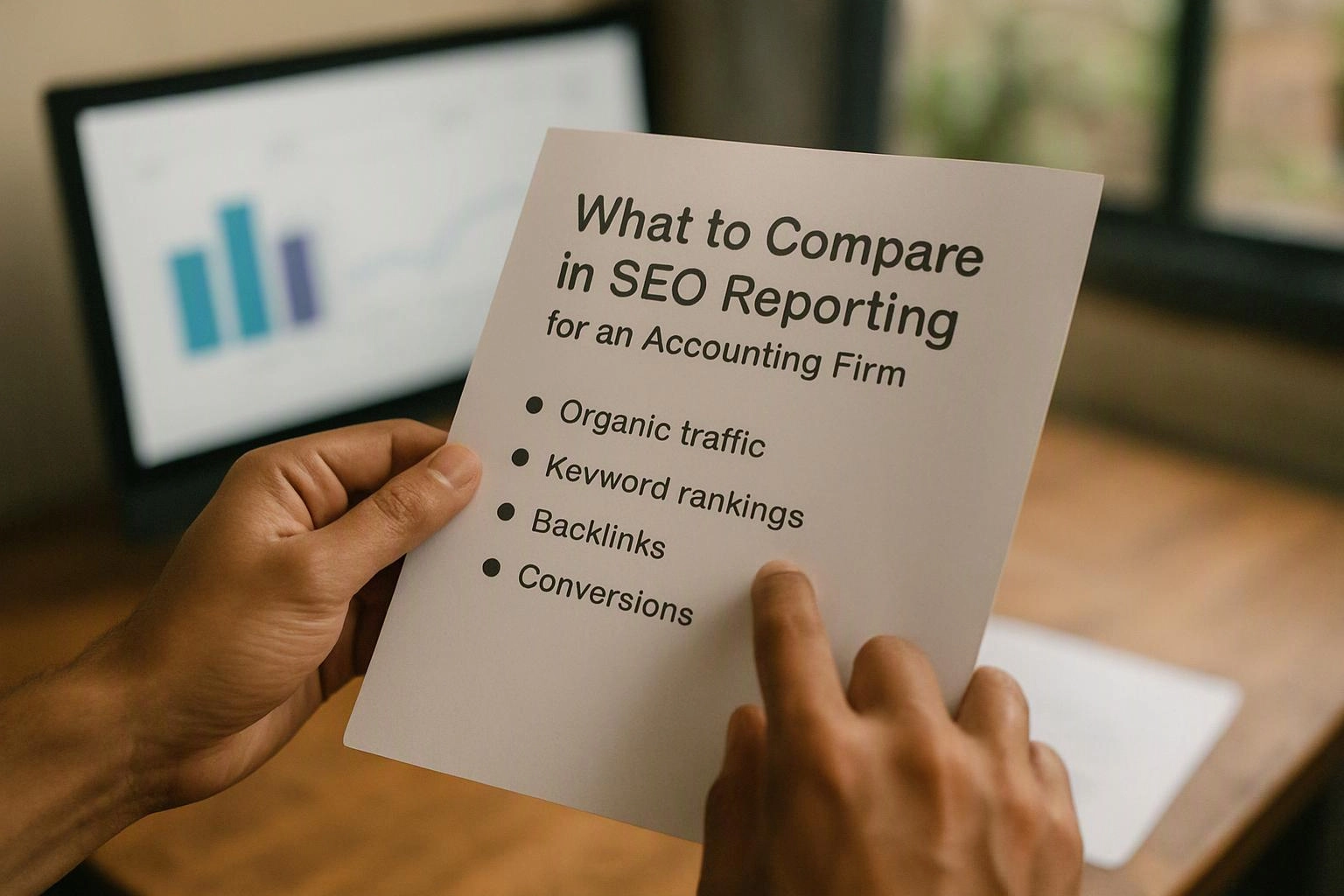
A client-ready report also gives accounting partners a clearer basis for discussion. It can separate activity from commercial relevance and make SEO recommendations easier to prioritise.
When a Managed SEO Report Is the Better Fit
A managed SEO report is the better fit when accounting firm leaders need clear interpretation, prioritised recommendations and a direct connection between SEO work and enquiries.
Managed reporting helps when partners do not want to interpret every chart or maintain the reporting workflow themselves. We explain lead quality, search intent, content performance and technical findings in terms that support marketing decisions.
Our SEO Reporting For Accountants service connects SEO data with SEO recommendations and business outcomes. The right report should make the next decision clearer, whether that involves content strategy, technical SEO or enquiry tracking.
How Should SEO Reports Track Accounting Firm Enquiries?
SEO enquiry tracking for accounting firms should connect organic landing pages and search intent with measurable actions such as contact submissions, calls and consultations.
Conversion tracking should define which actions count as enquiries. These may include contact form submissions, phone calls and booking forms, provided the tracking is set up correctly.
Lead attribution should show the relevant landing page, service page and search context where the data allows. We also separate raw conversions from qualified leads so a report does not treat every interaction as a valuable business opportunity.
Good reporting connects enquiry quality with organic search traffic. A service page that attracts fewer visits but stronger enquiries may deserve more attention than a page with high traffic and weak commercial relevance.
What Should an Accounting Firm Ask Before Choosing a Report?
An accounting firm should choose an SEO report by checking what it measures, where the data comes from, how enquiries are attributed and who turns findings into actions.
These questions help an accounting firm compare reporting quality, not just presentation. They also show whether the report can support decisions about service pages, content updates and technical improvements.
Which SEO Reporting Option Supports Better Decisions?
The reporting option that best supports decisions is the one that combines trustworthy data with clear interpretation, enquiry context and prioritised next steps.
An automated dashboard supports fast data access and regular monitoring. A managed SEO report supports leaders who need business performance analysis without turning raw metrics into conclusions themselves.
We assess reporting through marketing accountability, SEO priorities, content strategy, technical improvements and commercial outcomes. The useful test is whether the report helps an accounting firm decide what to do next and why.
Questions About SEO Reporting for Accounting Firms
How can an accounting firm tell whether SEO traffic is producing useful enquiries?
An accounting firm can assess SEO traffic by linking organic landing pages with contact form submissions, phone enquiries, booking forms and lead quality. Conversion tracking shows which actions occurred, while enquiry attribution adds the context needed to judge commercial value.
Which SEO metrics matter most for accounting services?
SEO metrics that matter most for accounting services are the ones that connect search visibility with qualified enquiries. Useful measures include organic clicks, search queries, landing-page performance, conversions and the quality of leads generated.
How should an accounting firm define an SEO conversion?
An accounting firm should define an SEO conversion as a measurable action that indicates meaningful interest in its services. The definition may include a contact form submission, phone enquiry or completed booking form, with separate consideration for lead quality.
Can SEO reports separate branded searches from non-branded searches?
SEO reports can separate branded searches from non-branded searches when search-query data is available and the report applies clear query classifications. This separation helps show whether organic visibility reaches new audiences or mainly reflects existing brand awareness.